
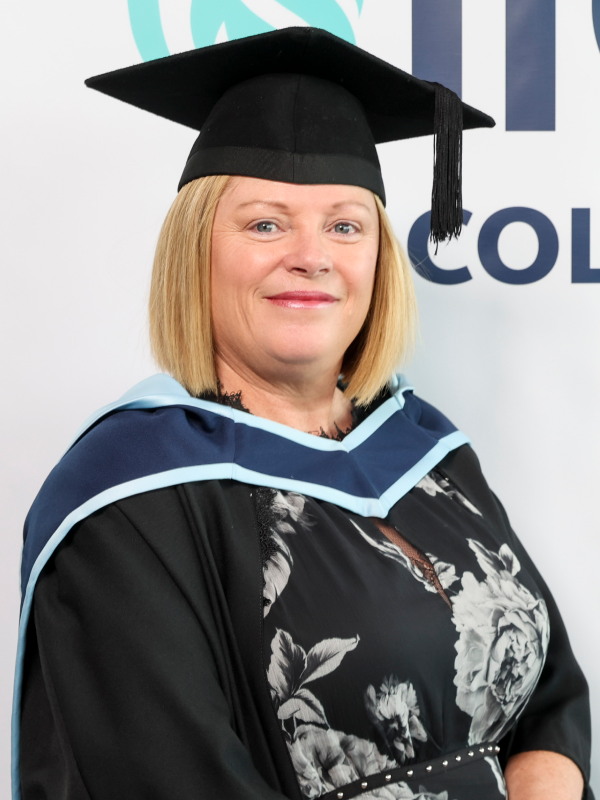
Prize Winner profile
Martina Kelly
MA in Integrative Child and Adolescent Psychotherapy
Awards
Student Excellence Award
Why did you choose to embark in training in Counselling and Psychotherapy with Children and Adolescents, and why did you choose IICP?
My reason for wanting to train as a Counsellor and Psychotherapist with Children and Adolescents started with my passion for caring for my children with special needs. Furthermore, as I work with children and adolescents, I have become intrigued by how best to meet their emotional and psychological needs.
IICP stood out to me because they use experiential and theory-based learning during their training. Learning by doing is something I value and believe is important when becoming a good therapist. Practising in simulations helped me better understand what therapy is like and feel more confident in my skills when working with children and adolescents. They also focused a lot on evidence-based treatments, which is something I care about. In my opinion, therapy should be based on science and on what actually works. I loved the idea of being trained in a programme that focuses on researched techniques and strategies.
What was your biggest highlight throughout your training?
Collaborating with the lecturers and fellow students was definitely one of my favourite parts of my training. Being able to bounce ideas off one another about different counselling techniques and approaches when working with children and adolescents. Learning about sand, art and play therapy. Understanding how important these are when working with children and adolescents. Also, learning how crucial the child’s age and developmental stage are in tailoring treatment. What stood out to me the most was the role-plays that actually put us in the client’s shoes. Helping us understand the importance of working with children and adolescents and how to better treat them in therapy. I also appreciated hearing everyone’s insights and experiences, which made working with this population in psychotherapy even more enjoyable.
What field of work or study were you in before you started the programme?
Before embarking on this journey, I worked with foster children and adolescents, learning how imperative it is to provide them with nurturing homes. Having raised special needs children, I understand what it feels like to have children who need that extra support. I completed a course in child psychology, which deepened my understanding of how the mind works. Followed by my Bachelor of Science in Integrative Counselling and Psychotherapy with IICP, where I studied multiple modalities of working therapeutically.
Can you tell us a bit about your research project or your chosen focus (Dissertation/Research Portfolio), and what motivated you to choose that area?
My research project focused on Sensory Processing Disorder (SPD) for personal reasons. Having children with special needs and my foster child having SPD, and seeing children struggle within the therapy room during my placement, motivated me. Through my research, I wanted to inform others about various issues in research methods that lead to unreliable results in their studies. I found that when looking through research articles, there were limited treatment approaches due to poor methodologies. I also observed that children are usually diagnosed with SPD with another disorder, such as Autism or ADHD, which could potentially affect treatment, so I wanted to find out how this may affect treatment plans.
I wanted to raise awareness that teachers and professionals who work with children with SPD may not have been taught about it or may have had to learn about it through their own research. When teaching or working with children with SPD, poor training can affect these children. Poor collaboration within multi-disciplinary teams was highlighted throughout my research, which can also affect children with SPD. If each profession isn’t effectively communicating and following poor guidance when working with these children, it can lead to difficulty when treating them.
Now that you have graduated, what are your next career or professional plans within the field?
Since completing my studies, I have started my own private practice, Viewmount Counselling and Psychotherapy. My practice is based on the Main Road in Tallaght village. Within my practice, I work with children and adolescents. I believe that young people can benefit greatly from therapy; however, they may feel reluctant to open up. Therefore, I strive to create a safe environment where they can talk. I work through a range of issues from anxiety to depression and family issues. One-to-one sessions allow me to target these issues and work with children to help them better understand their feelings and learn coping mechanisms. In addition to working with young people, I also work with parents/caregivers. Viewing therapy as a way for everyone involved to get something from it helps children feel comfortable knowing they have someone to support not only them but also their family.
What advice would you give to someone considering the field of counselling and psychotherapy with a focus on working with children and adolescents?
If you are considering child and adolescent counselling and psychotherapy, or are thinking about doing so because you want to help others! While helping others may be rewarding enough, there are many more reasons why you should become a therapist who specialises in working with young people.
First of all, remember that we were all children once. We have all faced challenges as children or adolescents. Think about the children you know. Whether they have parents who don’t get along, are stressed about school, are dealing with social pressures, or have mental health concerns, there are many children out there with these problems. The reason this relates to you is that you were a child once and faced challenges, too, maybe you went to counselling to get support. You overcame your challenges and grew to become who you are today. Your clients have not had that chance just yet. Many children do not know how to express their emotions or feel that there is no way to fix them. You can be that light at the end of the tunnel for these children.
You also have the chance to work with adolescents. Adolescents can be very confusing. Not only are they going through puberty and changes in their body, but they have a lot going on emotionally and mentally as well. You can help these young adults learn how to control their emotions and deal with the hard stuff life throws at them. Working with this population also allows you to be creative. Every child is different. Their background and history will play a role in your treatment with them. You can use the techniques you learn in your IICP studies, such as play, art, and other activities, to communicate with them. If you have never had the opportunity to parent a child yourself, that does not mean you cannot help them now. Help children and adolescents who need someone to express themselves to or who need a helping hand. You can make a difference in their lives. You could change their lives by helping them live a healthier, more emotionally and psychologically balanced life. Once you start seeing improvements in these young people, you will want to continue spreading awareness about children’s and adolescents’ mental health.